Goodyear Master-Planned Or Established? How To Choose
May 28, 2026
May 28, 2026
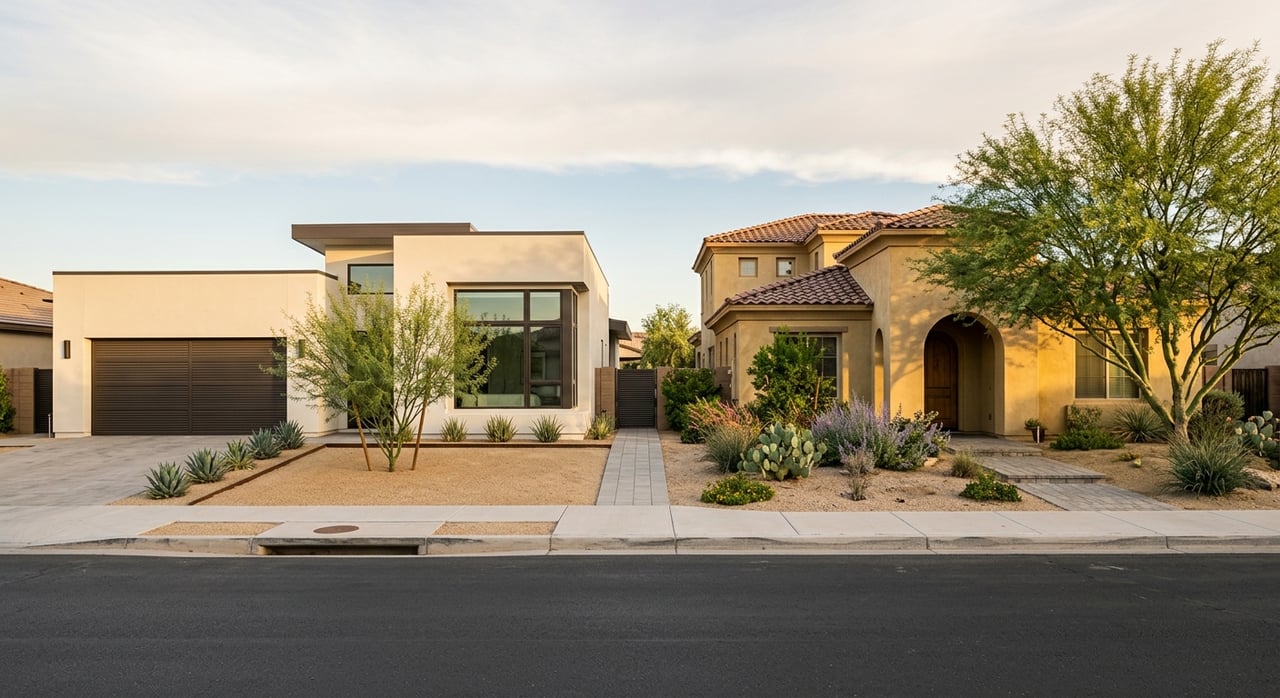
If you are house hunting in Goodyear, one choice can shape your daily life more than almost anything else: do you want a master-planned community or an established neighborhood? That decision affects your monthly costs, the look and feel of the area, how much flexibility you have with your property, and what kind of amenities you use most. If you are trying to weigh lifestyle, budget, and long-term fit, this guide will help you compare both paths with more confidence. Let’s dive in.
In Goodyear, “master-planned” and “established” usually point to very different ownership experiences. A master-planned community often comes with a more structured environment, shared amenities, and association rules that help shape the neighborhood’s appearance and operations.
An established neighborhood may feel less standardized. In many cases, you will see more variation in home styles, lot sizes, and property use, especially in no-HOA pockets identified by the city.
Goodyear has several well-known master-planned areas, and each offers a different version of planned living. While the details vary, these communities often appeal to buyers who want a clear amenity package and a more predictable neighborhood environment.
Estrella is one of the largest planned communities in Arizona. According to the community, it spans about 20,000 acres, includes more than 8,000 residences and about 22,000 residents, and features 65-plus miles of trails, three residents clubs, lakes, a waterpark, and more than 50 parks.
It also shows what buyers are often paying for in a newer planned setting. Estrella says homes are currently offered by seven builders, with 21 model homes and 55 floor plans, and one current example at Solvida lists a $112 monthly HOA fee.
PebbleCreek is Goodyear’s best-known 55+ master-planned community. Robson describes it as a gated active-adult community with more than 10,000 homeowners, 54 holes of championship golf, more than 100 clubs, indoor and outdoor pools, pickleball, restaurants, and a performance arts theater.
This is a good example of how a master-planned community can center daily life around amenities and social options. Some PebbleCreek villa products also include HOA-maintained front-yard landscaping and exterior maintenance, which can matter if low-maintenance living is a top priority.
Palm Valley is useful because it sits between the idea of a classic master plan and a more established neighborhood feel. City documents refer to Palm Valley as a master-planned mixed-use community, and the city’s HOA map shows that it includes multiple phase-based associations.
That setup can create more variety than buyers expect. Current listing examples in Palm Valley include homes on roughly 0.25 to 0.37 acres, along with golf-course homes and basement homes, so a planned community does not always mean every property feels the same.
Established neighborhoods can offer a different kind of value. Instead of paying for a large private amenity package, you may be buying into flexibility, larger or less uniform lots, and fewer association rules.
Goodyear’s HOA resources identify several no-HOA areas and neighborhood alliances. These include Historic Goodyear, North Subdivisions, Canada Village, and Wade Acres.
If you want room for RVs, hobbies, extra parking, or future changes to your property, established or no-HOA neighborhoods may deserve a closer look. Based on the city’s no-HOA mapping and current listings, these areas often include more lot-size variation and a wider mix of housing types.
Current listing examples show just how broad that range can be. Buyers may find manufactured homes on smaller lots, homes on quarter-acre lots, and even larger parcels of 0.29 acres, 1 acre, or more, sometimes with RV garages or room for additional uses.
One key difference is where the neighborhood experience comes from. In a master-planned community, much of the upkeep, amenities, and shared standards may be driven by the HOA or original developer framework.
In older neighborhoods, public investment may play a bigger role. Goodyear’s CDBG plan includes streetlight work on Litchfield Road in Historic Goodyear, and city outreach has included speed cushions in North Subdivisions.
Older neighborhoods often have more visible variation from one block to the next. That can be a plus if you like character, individuality, or a less uniform streetscape.
The city also tracks these areas separately. In Historic Goodyear, the city reports 43 percent homeowners, a median household income of $51,104, and 58 percent of housing units in good exterior condition, while North Subdivisions shows 45 percent homeowners, a median household income of $49,081, and 74 percent of housing units in good exterior condition.
When buyers compare community types, monthly costs deserve a close review. The right comparison is not just purchase price versus purchase price. It is total ownership cost versus total ownership cost.
In Goodyear, that may include HOA dues, village-specific or age-restricted fees, landscaping responsibilities, and special district assessments. For example, Estrella has current examples at $112 per month in Solvida, while some PebbleCreek products show higher monthly dues tied to their amenity structure and services.
Some Goodyear neighborhoods also have Community Facilities Districts, or CFDs. The city describes CFDs as special taxing districts used to finance and maintain public infrastructure.
That matters because these charges can appear on your property tax statement. The city specifically notes that Palm Valley CFD #3 appears on tax statements, so if you are comparing homes, you should check for both HOA dues and any CFD assessment.
If you are leaning toward a master-planned community, do not stop at the model homes or amenity list. You also need to understand the rules that will shape day-to-day ownership.
Arizona’s Department of Real Estate says it administers the HOA dispute process, and the Arizona Legislature’s Planned Communities Act governs many planned communities. For buyers, that makes it especially important to review CC&Rs, rules, dues, and dispute procedures before you make an offer.
Goodyear makes this easier than many cities. Its parcel-specific HOA map helps you see whether a property sits in an HOA and who manages it, and Neighborhood Services also offers an interactive tool to find an HOA name and property manager contact.
This is especially helpful in Goodyear because one area can include multiple associations, and nearby homes may have very different oversight. Before you fall in love with a home, confirm exactly what community structure applies to that parcel.
There is no one-size-fits-all answer here. The better choice depends on how you want to live, what you want to pay for, and how much structure feels helpful versus limiting.
A master-planned community may be the better fit if you want:
An established or no-HOA neighborhood may be the better fit if you want:
Choosing an established neighborhood does not mean giving up access to things to do. Goodyear lists 12 neighborhood parks, and the city notes that GSQ is its first-ever downtown.
That can be a meaningful plus if you prefer public amenities over private community fees. For some buyers, city parks, public infrastructure, and location convenience matter more than a private clubhouse or gated entry.
When you narrow your options, compare homes in both categories side by side. The smartest move is to look beyond marketing language and measure the real tradeoffs.
Ask yourself:
A good decision usually comes down to matching your daily routine with the right ownership structure. If your ideal weekend includes trails, clubs, pools, and organized community features, a master-planned neighborhood may feel worth the added structure. If you care more about space, flexibility, and fewer restrictions, established Goodyear neighborhoods may be the stronger fit.
If you want help comparing specific Goodyear neighborhoods, HOA structures, or total monthly ownership costs, The Ackerman Team can help you evaluate your options with clear, local guidance.

September 17, 2026
September 10, 2026
September 3, 2026

Blog
August 28, 2026
August 27, 2026
August 20, 2026
August 13, 2026

August 6, 2026

August 6, 2026
The Ackerman Team is dedicated to providing you with exceptional service and unparalleled expertise. Reach out to us today.